



Description
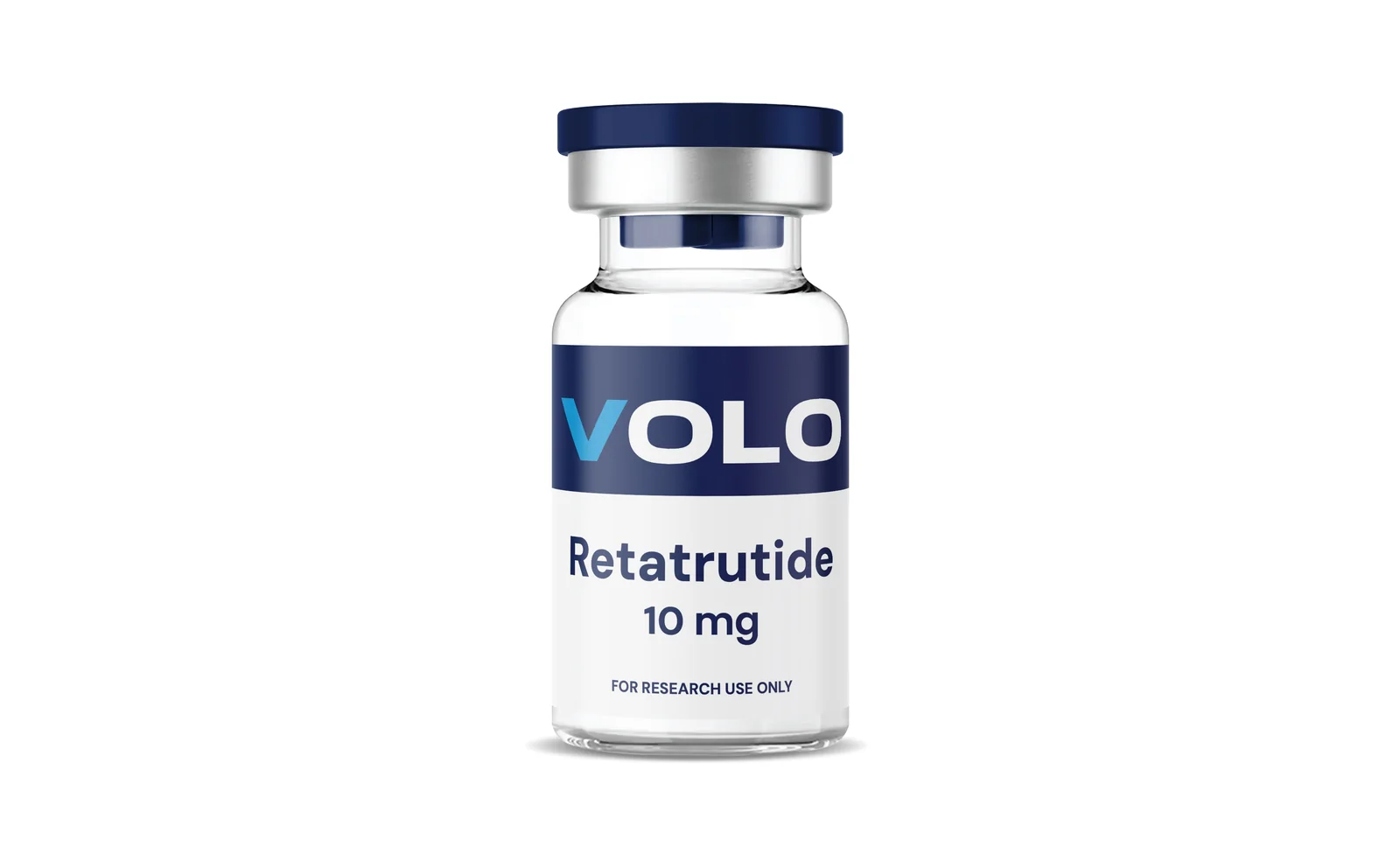
Retatrutide 10 mg by VOLO relates to retatrutide, an investigational molecule attracting attention for substantial findings in obesity research. It combines three receptor targets: GIP, GLP-1 and glucagon. If you are wondering whether it is simply another fashionable name, the essential answer is this: clinical data show real potential for weight reduction, but development is not yet complete. Alongside possible benefits, it is necessary to understand digestive problems, other safety signals and the limits of current knowledge.
Why retatrutide attracts so much attention
Retatrutide expands the familiar story of GLP-1 molecules with additional receptor targets. While semaglutide acts on GLP-1 and tirzepatide on GIP and GLP-1, retatrutide adds the glucagon receptor. Interest therefore concerns more than appetite; it includes the broader relationship between food intake, metabolic responses and energy management.
It is useful to understand that the triple profile is not a mixture of three separate substances. It is one molecule whose overall action is being tested in clinical studies. More receptor targets also do not automatically mean greater safety or the best option for everyone. An interesting mechanism must be assessed alongside efficacy and tolerability findings.
Retatrutide efficacy in TRIUMPH-1
Retatrutide produced greater average weight reduction than placebo in TRIUMPH-1, but this result does not establish the efficacy of a specific VOLO vial.
TRIUMPH-1 included 2,339 adults with obesity and without diabetes. After 80 weeks, the highest retatrutide study arm achieved a mean body-weight change of −25.0% compared with −3.9% with placebo. This is the result of an analysis including randomized participants according to their assigned treatment. Other study arms had different effect sizes. This figure is substantial enough without adding promises of rapid or guaranteed weight loss.
What to take from it for realistic expectations
The data show that retatrutide has significant clinical potential in a specific population. They do not say that every person will lose a quarter of their weight. Assessment lasted approximately a year and a half and used a controlled study medicine. The result also does not mean that retatrutide is already a routinely approved treatment.
Why reading only the largest number is not enough
Mean weight reduction alone does not show how many people completed treatment, what problems they experienced or whether they found the benefit acceptable. If the molecule interests you, read its strong findings together with safety information. Their combination shows the actual value of the evidence.
How it works in simple terms
Retatrutide activates GIP, GLP-1 and glucagon receptors. These signals help regulate food intake and metabolism, which is why it is called a triple agonist. Development aims to establish how combining them in one molecule affects weight and other health measures. This is neither direct fat dissolution nor proof that more receptors must always be better.
Main points of interest genuinely associated with the molecule
- Substantial potential for weight reduction: a phase 3 clinical trial demonstrated a greater mean reduction than placebo in a defined population of adults with obesity.
- A broader metabolic focus: the combination of GIP, GLP-1 and glucagon receptors distinguishes retatrutide from better-known molecules and explains interest in further development.
- Interest in related health problems: alongside weight, the TRIUMPH program examines specific additional outcomes, for example in subgroups with sleep apnea or knee osteoarthritis.
- Available original data: there is no need to rely only on personal experiences and striking slogans. Findings can be found in a scientific publication and development-program materials.
Side effects: benefit cannot be separated from tolerability
Among the most common adverse events in TRIUMPH-1 were digestive problems, particularly nausea, diarrhea, vomiting and constipation. For some participants, they were significant enough to contribute to stopping treatment. Reduced appetite is therefore not the same as an uncomplicated experience. How a person feels and manages everyday functioning matters.
The safety signals monitored also included dysesthesia, meaning unpleasant altered sensation, and hypotension, meaning low blood pressure. The latter was more common in people taking blood pressure medication. Dizziness or unusual skin sensations therefore concern more than whether someone feels less hungry. They belong in the overall assessment of tolerability.
In the congress overview, serious adverse events were reported in 7.7% to 10.5% of participants in retatrutide arms versus 5.5% with placebo. This figure describes occurrence during the study; it does not establish that the molecule caused every individual event. It also illustrates why retatrutide cannot be described as a preparation with a fully established safety profile.
Who should approach this information with particular caution?
- People taking blood pressure medication: hypotension occurred in the clinical program, particularly with concurrent antihypertensive treatment.
- People with significant digestive problems: common retatrutide adverse effects concern digestion and may substantially affect tolerability.
- People with previous pancreatitis or serious illnesses: findings from a population selected according to specific study criteria cannot simply be transferred to them.
- Pregnant or breastfeeding people and adolescents: findings in adult study participants are not evidence of safety in these different populations.
- People seeking a rapid replacement for treatment: investigational status means that benefits, risks and potential future conditions of use are still being assessed.
Retatrutide does not have ordinary approved product documentation with a final list of indications and contraindications. Creating such a list based on another medicine would be misleading. Severe abdominal pain, persistent vomiting, fainting or a serious deterioration in condition require medical assessment regardless of the substance involved.
Current status and the meaning of the 10 mg package
As of November 6, 2026, retatrutide remains an investigational molecule according to its developer, Lilly. In September 2026, the company stated that it planned a US regulatory submission for the first quarter of 2027. Positive studies are therefore not the same as completed approval.
VOLO Retatrutide 10 mg states a declared total content of 10 mg and the intended use research use only. It is not intended for self-treatment or administration to humans. Clinical data do not validate this specific product or establish equivalence with the study medicine. The stated quantity is not an individual dose; the product specification must be assessed separately.
Retatrutide versus semaglutide and tirzepatide
Semaglutide and tirzepatide are active substances in authorized medicines with specific documentation, while retatrutide remains in development. The difference involves more than the number of receptors. Comparing percentages from different studies without considering their populations and durations may create a misleading ranking. Benefits, risks and access to established treatment matter in health decisions.
Practical FAQ
Is retatrutide already an approved weight-loss medicine?
As of the stated date, it remains investigational. Clinical findings explain interest in the molecule, but do not themselves establish an approved use or confirm the properties of research products from different brands.
Do three receptors guarantee a better result?
No. They describe a mechanism, rather than a personal guarantee. Actual clinical data, tolerability and health context matter. More targets also mean a need to understand their combined response and possible risks.
Why might a different average weight reduction be reported?
Articles may use a different study arm or a different approach to including participants. This is why a specific result and its context are provided here. The aim is to understand the documented benefit, rather than compete for the highest percentage.
What still matters with such substantial weight reduction?
Changes in health and everyday functioning matter, rather than weight alone. A change in a laboratory measure, less pain and better sleep are different outcomes, each requiring its own evidence. Retatrutide is interesting because these broader questions are being investigated. It makes no sense, however, to infer every possible health benefit from one striking average. A realistic perspective can appreciate a promising finding while leaving open what still requires further assessment.
Compare the potential with what remains unresolved
Check the product specification, current development status and safety information. Retatrutide is interesting because of its data, rather than because it removes the need for professional decision-making. If you are dealing with your own weight or health problems, use the evidence to inform a consultation about established treatment options.
Scientific sources
- PubMed / NEJM: TRIUMPH-1 — retatrutide in adults with obesity
- Lilly: TRIUMPH-1 — results and safety overview
- Lilly, September 29, 2026: retatrutide remains in development
- ClinicalTrials.gov: TRIUMPH-1 — participants and outcomes assessed
Retatrutide versus Semaglutide and Tirzepatide: what matters?
Retatrutide differs from semaglutide and tirzepatide in receptor profile and clinical-development status. The Semaglutide 5 mg and Tirzepatide 10 mg pages describe their respective evidence and risks. More receptor targets alone do not establish better safety, and different studies cannot simply be ranked by the largest percentage.
Our guide to research products distinguishes a molecule study from documentation for a particular vial. The declared 10 mg is not a personal dose.



Reviews
There are no reviews yet.