



Description
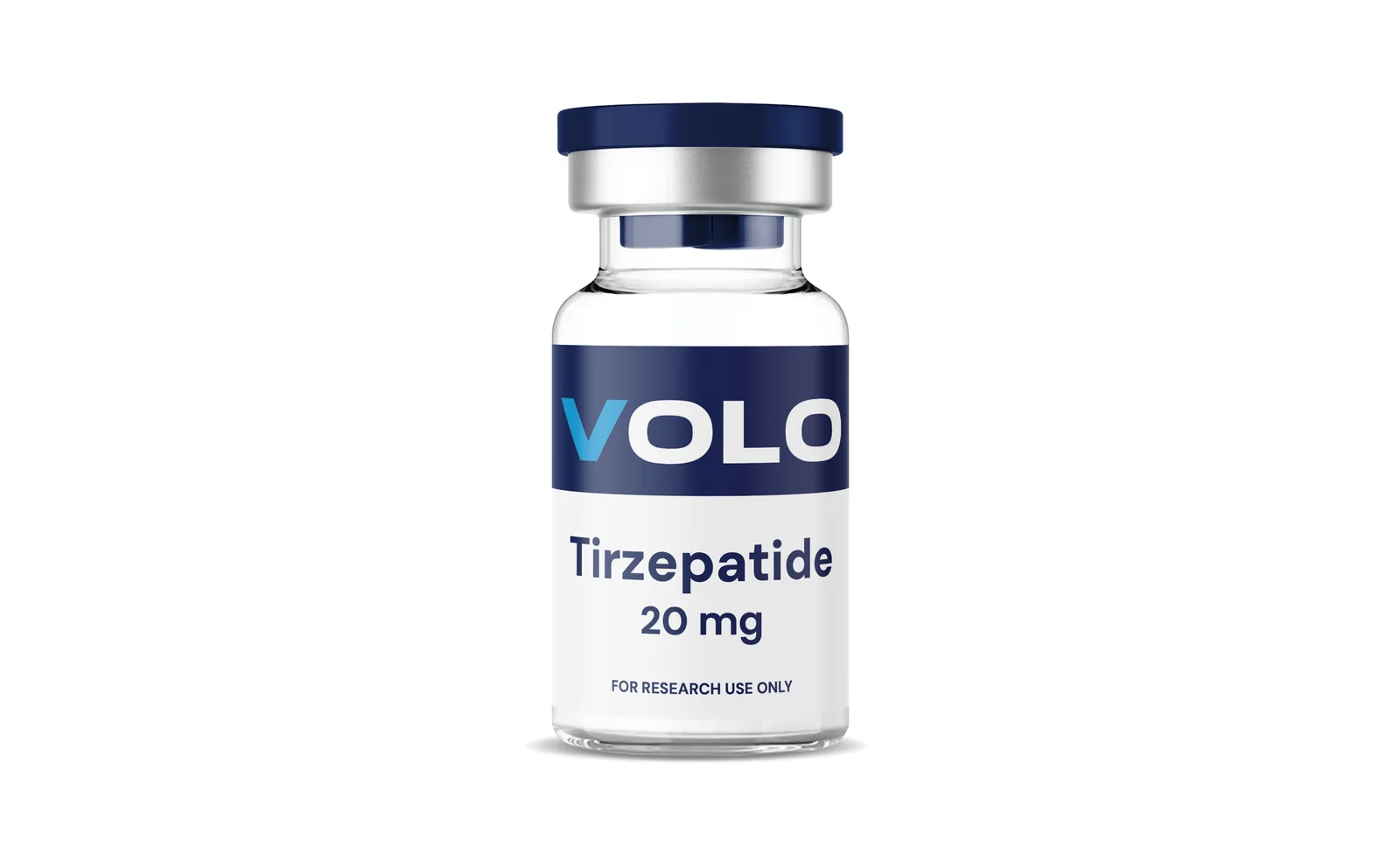
Tirzepatide 20 mg by VOLO relates to tirzepatide, a molecule known for its dual action on GIP and GLP-1. Clinical research on tirzepatide examines appetite, satiety and body weight. Long-term studies assess changes in body weight and tolerability under their study conditions. However, a larger declared content of 20 mg does not mean a different molecule or automatically greater effectiveness.
Tirzepatide and weight maintenance: what do long-term data not establish?
Long-term tirzepatide data do not guarantee a permanent result for everyone or establish the efficacy of a particular research vial.
Weight regulation is not only about whether the number on the scale changes over a few weeks. It also matters whether the result lasts longer and how the person feels during treatment. Tirzepatide is an ingredient in the authorised medicine Mounjaro, for which the EMA describes use in weight management for defined groups and in the treatment of type 2 diabetes.
Its appeal lies in influencing some of the regulatory signals around food. Satiety and reduced hunger can help lower energy intake. However, this does not erase every reason for weight gain or replace an overall approach to health. A meaningful expectation connects benefit with long-term tolerability and personal health circumstances.
Long-term tirzepatide effectiveness in SURMOUNT-1
Long-term SURMOUNT-1 follow-up demonstrated greater average weight reduction with the study tirzepatide than with placebo in a defined patient group, rather than establishing the efficacy of this research package.
The long-term evaluation of SURMOUNT-1 followed 1,032 participants with obesity and prediabetes. At 176 weeks, mean weight reduction in the highest evaluated tirzepatide arm was 19.7%, compared with 1.3% with placebo. This concerns a specific group and a specific study medicine. The result therefore cannot simply be transferred to every person or any pack bearing the same molecule’s name.
What is valuable about the long-term result
Longer follow-up shows that clinical interest in tirzepatide does not rest only on the first few months. It helps answer a different question from a brief personal experience. At the same time, it reminds us that obesity and metabolic problems have a long-term character. If you are looking for a clear reason for the attention given to the molecule, this connection to longer evaluation is important.
How to form realistic expectations
A study average is not a personal prediction. Results differed between participants, and tolerability influenced the course of treatment. It makes most sense to ask about expected benefit, adverse effects and whether the person matches the group for which the particular medicine is intended, all at the same time.
How it works in simple terms
Tirzepatide activates GIP and GLP-1 receptors. These hormonal pathways relate to the response to food, glucose regulation and appetite. In an approved product, the mechanism supports the glucose-dependent insulin response and influences hunger and satiety. Delayed gastric emptying is another related effect. The dual profile means two receptor targets for one molecule, rather than two separate ingredients.
The molecule’s main evidence-based benefits
- Clinically documented weight regulation: significant average changes versus placebo have been established for the studied medicine, including longer follow-up of a specific patient group.
- A relationship with satiety and hunger: tirzepatide acts on an important part of energy intake, rather than explaining weight only through portion size or willpower.
- A connection with glucose regulation: the molecule also has a role in an authorised product for type 2 diabetes, according to its approved conditions of use.
- More than a brief experience: available longer-term data allow benefits to be considered over a broader timescale while safety considerations are followed as well.
Side effects: what can make everyday functioning harder
The most common adverse effects include nausea, diarrhoea, vomiting, constipation and abdominal pain. Reflux, belching, bloating or fatigue may also occur. Some people cope relatively well with these problems, while others may experience substantial limitations. If reduced food intake is accompanied by significant nausea, it is not the same as a comfortable feeling of satiety.
European documentation also lists gallstones, gallbladder inflammation and acute pancreatitis. Severe vomiting or diarrhoea can cause dehydration and impair kidney function, including acute failure. Serious allergic reactions such as anaphylaxis and angioedema have been reported rarely. These situations are reasons to assess tolerability just as carefully as weight loss.
Combining treatment with insulin or a sulfonylurea increases the risk of hypoglycaemia. Rapid changes in blood glucose may temporarily worsen diabetic retinopathy. Persistent severe abdominal pain, facial swelling, difficulty breathing or substantial deterioration in condition requires prompt medical assessment.
Who needs a particularly careful discussion of benefits and risks
- People allergic to tirzepatide or excipients: this is a formal contraindication in the European documentation for the particular medicinal product.
- People with previous pancreatitis: data are limited, and use requires greater caution rather than an automatic assumption of the same safety as in others.
- People with severe gastroparesis or serious digestive disease: delayed gastric emptying can be an important consideration when assessing tolerability.
- Patients with diabetic retinopathy: professional monitoring is important, particularly with a substantial change in blood glucose control.
- Pregnant and breastfeeding women: tirzepatide is not recommended during pregnancy; breastfeeding is assessed individually according to current information and the needs of mother and child.
- People facing anaesthesia or deep sedation: healthcare professionals need to know about treatment because of the risk of residual stomach contents and aspiration.
- People taking other medicines or prone to dehydration: the person’s overall health matters to an assessment, not just weight and the expected effect.
What the Tirzepatide 20 mg content means
The VOLO product states a declared total quantity of 20 mg of tirzepatide and the designation research use only. It is not intended for self-treatment or administration to humans and is not another brand of Mounjaro. Clinical findings do not verify the contents of this particular pack. The figure 20 mg identifies the declared mass, not an individual dose or concentration.
20 mg versus 10 mg: a difference in content, not a promised result
The 20 mg variant states twice the total content of the 10 mg variant. Both, however, refer to the same molecule with the same type of receptor profile. A larger pack does not establish a doubled effect, better safety or suitability for a particular person. The exact product specification and its documented properties must be assessed separately.
If you compare tirzepatide with semaglutide, this is a difference between molecules: GIP and GLP-1 versus GLP-1 alone. Retatrutide adds another target but remains investigational. Benefit, risk and regulatory status provide more useful guidance than the simple description “stronger peptide”.
Practical questions before making a decision
Does long-term effectiveness mean a permanent result for everyone?
No. The study shows an outcome under particular conditions in a particular population. It does not automatically predict lifelong weight development. It is important to assess both the benefit and how someone will tolerate treatment over the long term.
Can reduced appetite be a problem?
Yes, if accompanied by substantial nausea, vomiting, dehydration or a significant limitation in everyday functioning. The aim of a health decision is not to achieve the least possible hunger at any cost, but an acceptable balance of benefit and risk.
Is a larger pack automatically a better choice?
No. A larger declared quantity does not add a different mechanism or prove better quality. For a research product, its specific specification is important; for a health decision, authorised treatment and individual professional assessment matter.
Why does long-term tolerability matter as much as the result?
If symptoms substantially disrupt daily life, the percentage of weight lost does not capture the entire benefit. Decision-making therefore also includes digestion, fluid intake, general condition and concurrent treatment. These questions are not minor extras: they help determine whether the approach is acceptable over the long term for a particular person. A strong clinical result is a good reason for interest in the molecule, but only the combination of effectiveness and tolerability provides a basis for a responsible health decision.
Choose with the whole picture in mind
Compare documented benefits with side effects, verify the precise specification and do not confuse pack contents with personal health advice. If you are addressing your own weight or diabetes, use this information for a discussion with a doctor. The better you understand both effectiveness and risks, the more meaningful the questions you can ask.
Scientific sources
- EMA: Mounjaro — tirzepatide uses and benefit assessment
- EMA: current product information, contraindications and risks
- NEJM: tirzepatide in long-term follow-up of obesity and prediabetes
- ClinicalTrials.gov: SURMOUNT-1 — the original study and its continuation
Tirzepatide 20 mg versus 10 mg: how should you read the difference?
Tirzepatide 20 mg states twice the declared content of the same molecule as the Tirzepatide 10 mg variant. This does not mean twice the effectiveness or better safety. Compare material identity and the documented specification of the particular batch; clinical data alone do not confirm either pack’s contents.
Our guide to research products distinguishes mass, concentration and study findings. A research-use designation is not a recommendation for personal use.



Reviews
There are no reviews yet.